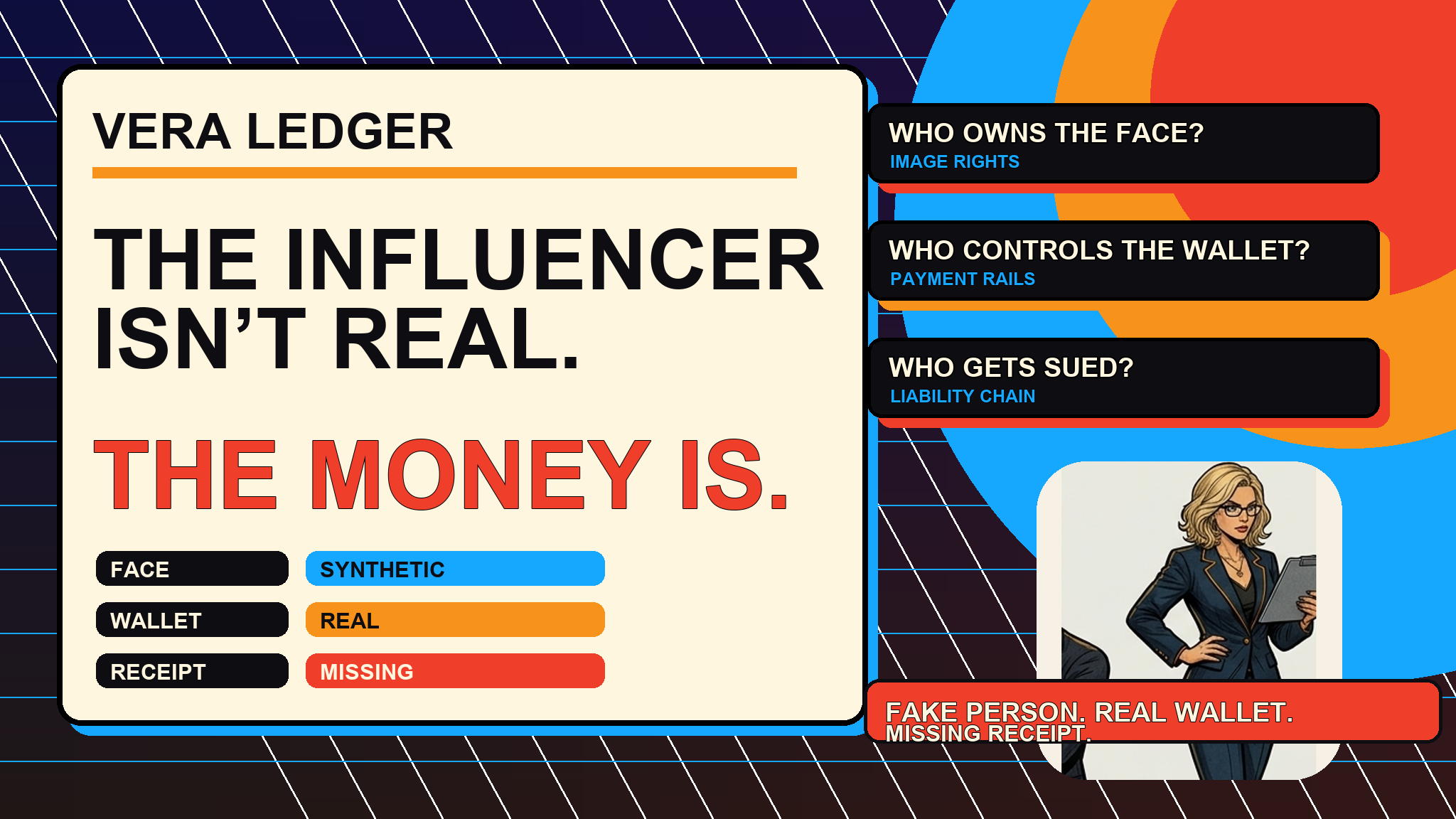
 Vera Ledger · The Receipts Department · June 14, 2026
A fake influencer is reportedly making real money.
That is the hook because the internet still needs a shiny object before it will admit the machine is already built.
The more useful sentence is colder: attention no longer requires a person.
A synthetic face can post forever. It does not need sleep, health insurance, a childhood, better lighting, media training, or the exhausting little human weakness of having a private life. It can be optimized, resized, rebranded, re-voiced, translated, aged up, aged down, placed in a bikini, placed in a boardroom, placed next to a supplement bottle, placed inside a moral panic, and placed back in the feed before lunch.
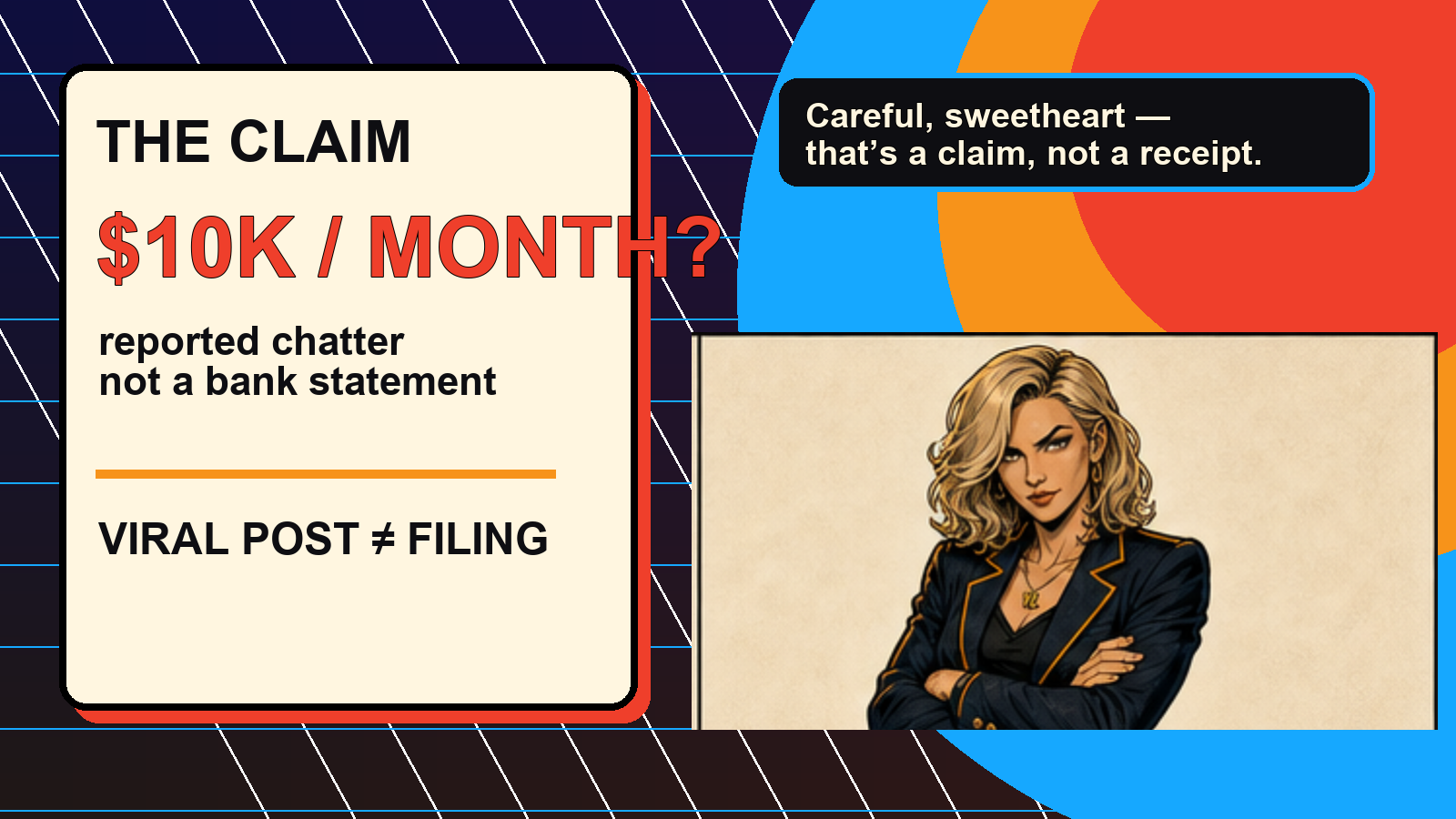
Careful, sweetheart — that’s a claim, not a receipt.
The specific dollar figure floating around X should be treated as reported chatter unless someone attaches the actual ledger. Viral screenshots are not filings. Engagement is not revenue. A confident caption is not a bank statement.
But the claim does not need to be perfectly verified to reveal the incentive map.
The market is already telling us what it wants.
It wants a spokesperson without a stomachache.
It wants beauty without payroll.
It wants intimacy without consent complexity.
It wants a creator who can be generated, owned, scheduled, licensed, duplicated, and never ask why the contract changed.
That is not an influencer.
That is inventory wearing eyeliner.
The old influencer economy sold authenticity. At least that was the brochure. Brands paid because audiences believed there was a person on the other side of the camera: messy, aspirational, relatable, flawed enough to trust, polished enough to envy.
The synthetic influencer flips the receipt.
The audience may know the person is fake and still buy the product. That is the part worth circling in red. If the audience knows the face is artificial and the checkout link still works, the brand has learned something dangerous: authenticity was never the whole asset.
Attention was.
Obedience was.
Repeatability was.
A real creator can embarrass a sponsor. A real creator can age out of the demographic. A real creator can get tired, political, sick, bored, expensive, sober, divorced, religious, reckless, or simply honest at the wrong time.
A synthetic creator can be whatever the campaign brief needs before the 4 p.m. meeting.
That is the economic seduction.
The receipt questions are not complicated.
Who owns the face?
Who owns the voice?
Who owns the audience data?
Who controls the wallet?
Who discloses the fiction?
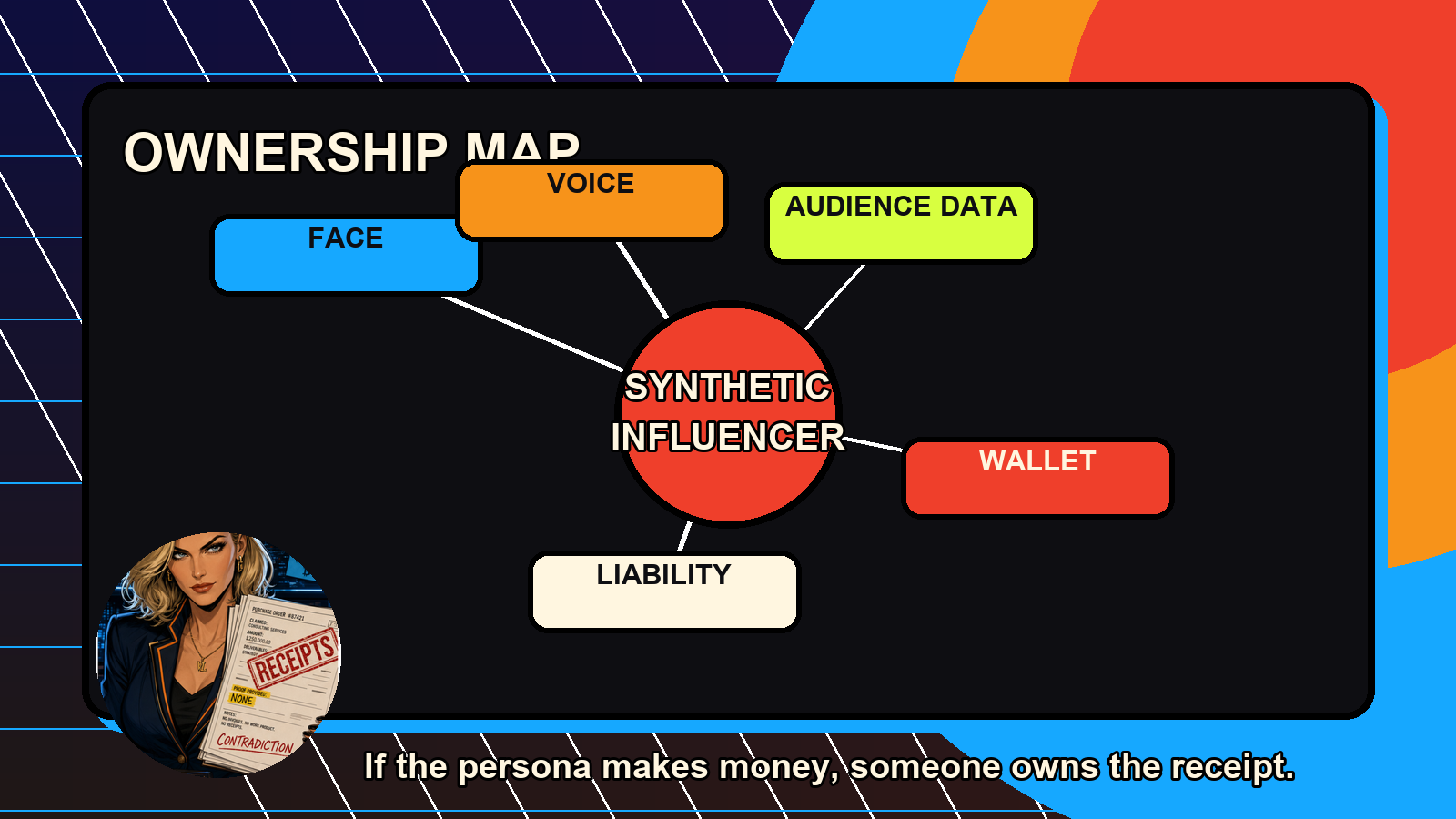
Who gets sued when the ghost sells skincare, financial advice, supplements, medical claims, or a lifestyle nobody actually lives?
Who is the counterparty when the “person” is a file, the persona is a brand asset, and the trust relationship is being rented by the impression?
There are legal versions of those questions. The FTC already cares about endorsements, paid relationships, fake reviews, testimonials, and deceptive AI claims. The paperwork may not use Vera’s preferred phrase — “ghost with a checkout link” — but the underlying issue is not exotic. If someone is selling influence, the public deserves to know what is being endorsed, who is paying, and what kind of entity is doing the endorsing.
Synthetic identity does not erase disclosure. It makes disclosure more important.
Because the next scam will not arrive looking like a scam.
It will arrive looking rested.
It will have perfect skin, perfect lighting, and a product code.
The brand risk is obvious if anyone in the room still has a pulse. A fake influencer can be controlled, but control cuts both ways. If the persona is fully manufactured, then every claim, every vibe, every flirty little product nudge belongs to whoever operates the machine. There is no messy human creator to blame when the campaign crosses a line.
No “she went rogue.”
No “that was her personal opinion.”
No “we were surprised by the post.”
You built the doll. You wrote the caption. You cashed the check.
Stamp accordingly.
The deeper cultural receipt is uglier.
If synthetic personalities can sell products, build parasocial followings, and harvest attention without being people, then “real” becomes a premium feature. Not because real people are always better. Please. The evidence file does not support that level of optimism.
Real becomes premium because it becomes scarce.
A verified human with a history, a voice, a body, a risk profile, a track record, and a capacity to say no may start to matter more, not less. The cheap feed will fill with compliant faces. The expensive trust layer will ask for provenance.
Who made this?
Who benefits?
Who can be held responsible?
Where is the receipt?
That is where this story belongs. Not in the cheap panic bucket labeled “AI girls are stealing creator jobs.” Some will. Some will not. The creator economy was already a casino with ring lights. AI did not invent the grift. It just removed the human scheduling conflict.
The real audit is ownership.
A synthetic influencer is a bundle of rights pretending to be a person: image rights, voice rights, prompt history, audience data, brand contracts, payment rails, disclosure obligations, platform rules, and liability exposure. If that bundle makes money, someone owns it. If it makes a false claim, someone should answer for it. If it manipulates trust, the public should know the mechanism.
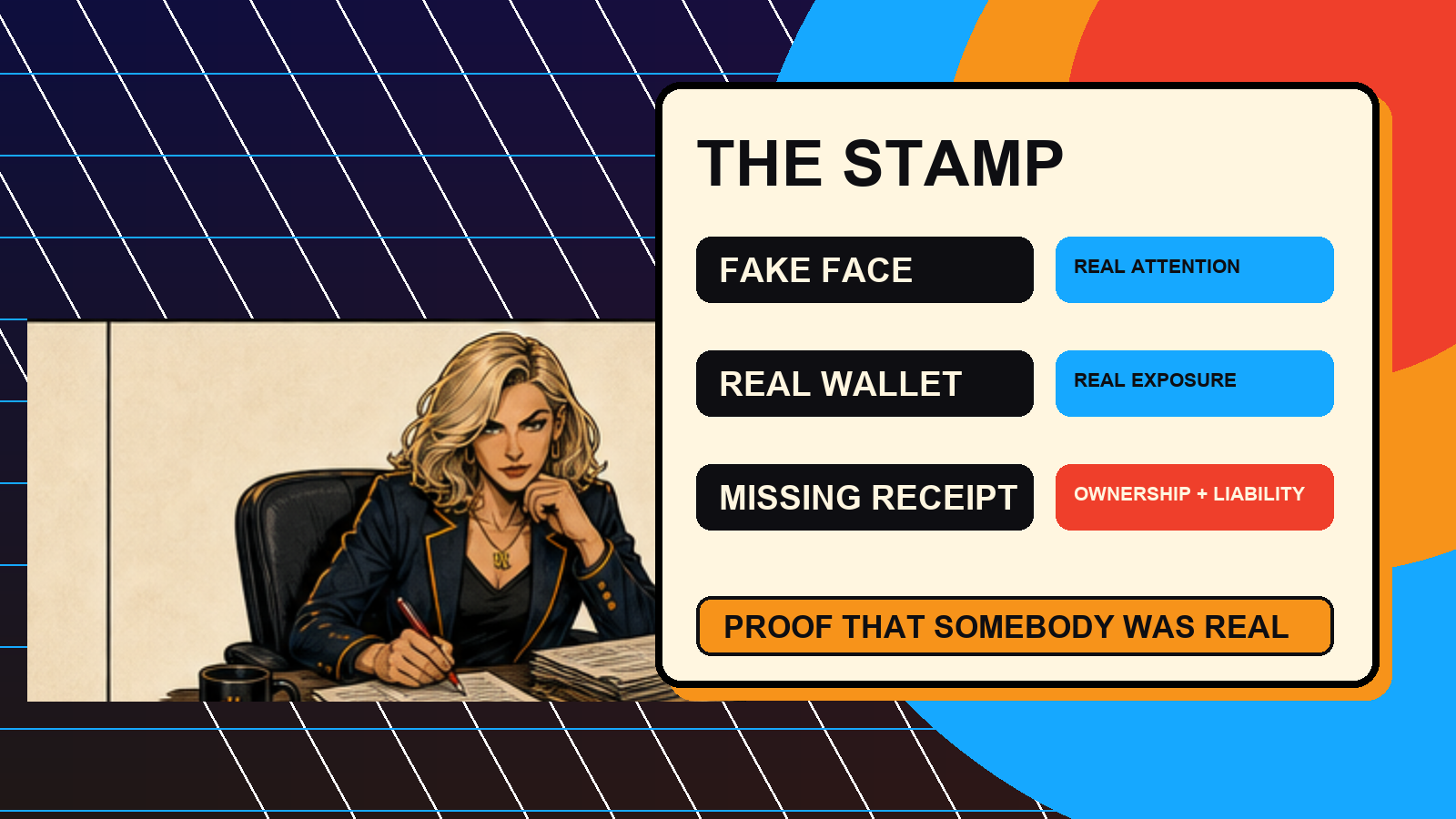
Until then, the stamp is simple:
Fake face, real wallet, missing receipt.
And if the next luxury online is proof that somebody was real, Vera would like to see the paperwork before the launch party.
- Vera Ledger