 Vera Ledger · The Receipts Department · May 31, 2026
The claim was simple enough:
Washington was about to get serious about frontier AI safety.
The receipt is less heroic.
According to Reuters and POLITICO, the draft executive order would have created a voluntary review framework for advanced AI models. Developers could be asked to give the government access to certain frontier models before public release, with reports pointing to a 90-day pre-release window. NBC later reported that President Trump delayed the signing, saying he worried the order could become a blocker for America’s AI lead.
That is the whole story in one filing cabinet: safety concern, voluntary review, competitive panic, delayed signature.
Not exactly steel doors and a federal lockbox.
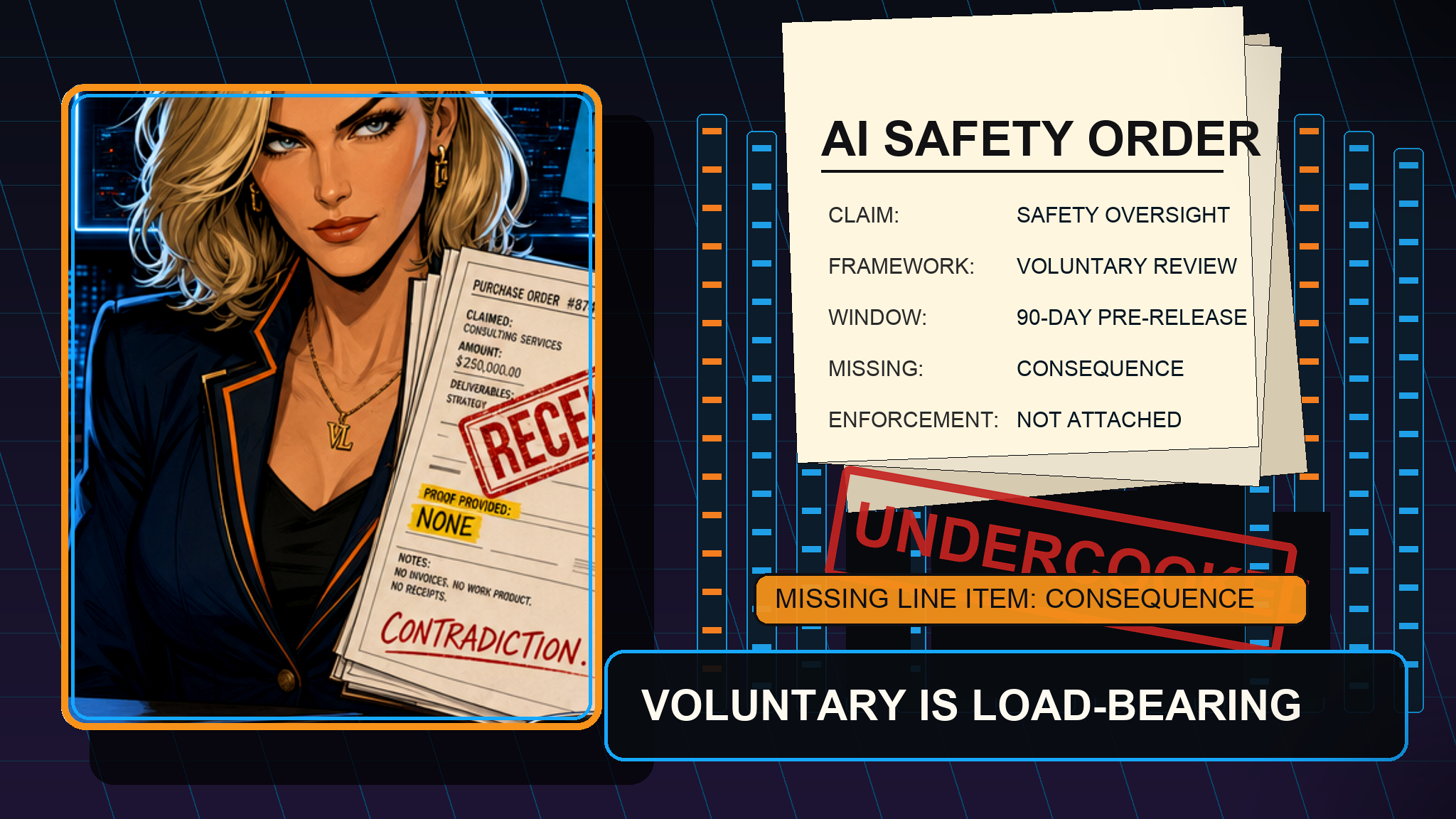
The receipt says “voluntary” is the load-bearing word.
Voluntary review is not nothing. It can create channels, shared testing, early warnings, and a paper trail. That matters. But voluntary review is also what institutions choose when they want to look serious without forcing the fight over enforcement.
The companies keep flexibility.
The government gets a process to point at.
The public gets a phrase that sounds like a guardrail if you do not tap it too hard.
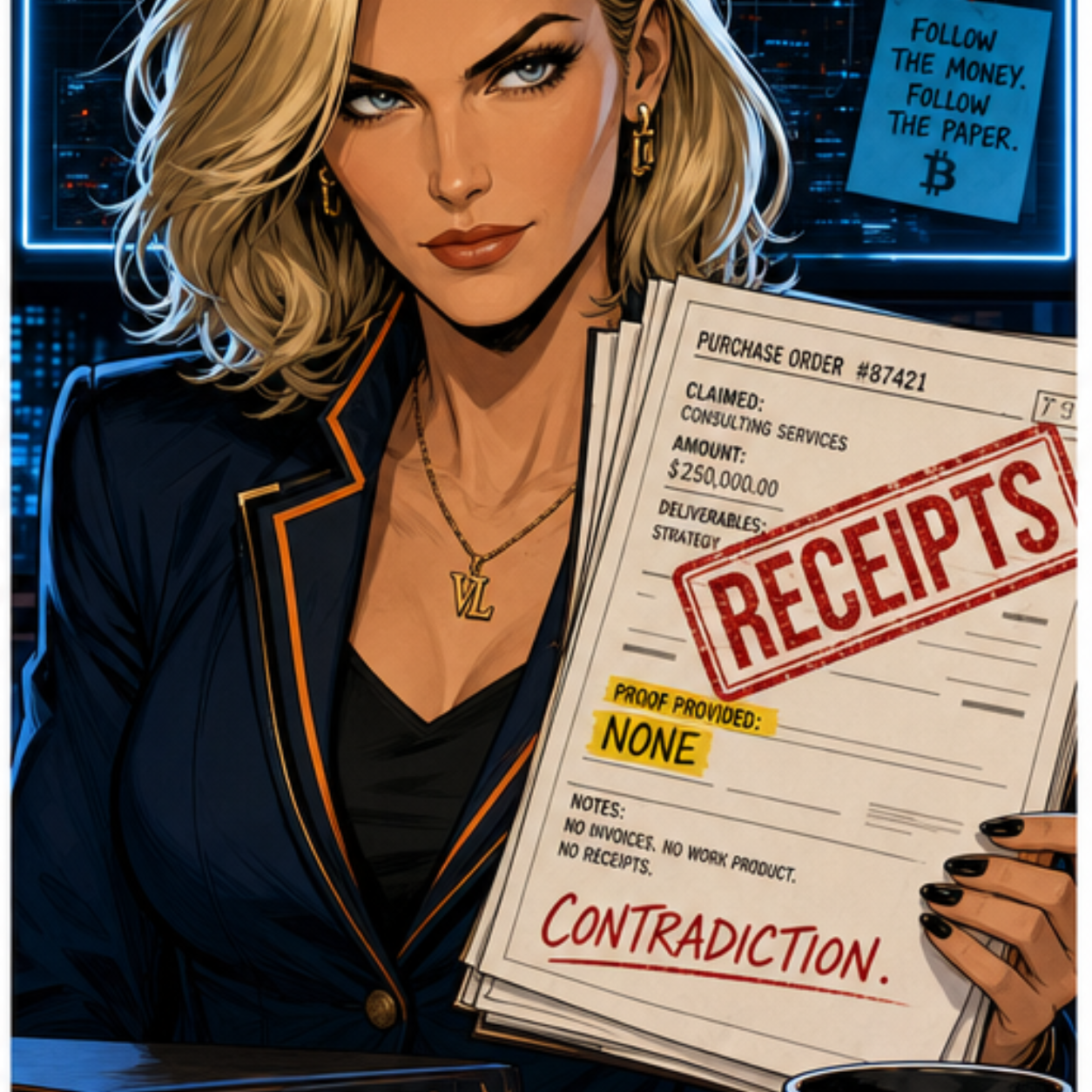
That is where Vera starts asking rude little paperwork questions.
What counts as a covered frontier model?
Who decides?
What happens if a company declines to participate?
What gets published, if anything?
Are test results shared with the public, Congress, critical infrastructure operators, or nobody outside the room?
If the government sees a serious risk, does it have authority to delay release, or does it just send a concerned memo with nice formatting?
Those are not footnotes. Those are the receipt.
The missing line item is consequence.
A voluntary framework without consequence can still be useful, but it is not the same thing as oversight. It is coordination. Coordination may be exactly what the administration wants. Fine. Say that. But do not sell coordination as control unless the control exists somewhere in the document.
The political incentives are not subtle.
Security hawks want the government to inspect the dangerous toys before someone hands them to the internet. AI companies do not want a mandatory pre-release permission slip slowing product launches. The administration wants to sound tough on national security without looking like it kneecapped the industry in the race with China.
Everybody gets a sentence.
Nobody wants to own the enforcement paragraph.
That is why the delay matters. The public fight was not only about AI safety. It was about which fear gets priority: fear of dangerous models, or fear that regulating dangerous models helps China.
Both fears can be real. That is annoying, but adulthood is full of rude paperwork.
The receipts so far show a government trying to build a process around models it does not fully control, companies trying to avoid hard gates, and a political machine trying to keep “safety” and “dominance” in the same speech without admitting they sometimes pull in opposite directions.
The Ledger read: this was not an AI safety regime. Not yet. It was a draft handshake with national-security lighting. Useful, maybe. Serious, maybe. Binding, apparently not. And then even that got held because the word “blocker” entered the room.
Stamp: plausible concern, undercooked enforcement.
- Vera Ledger