Full recap
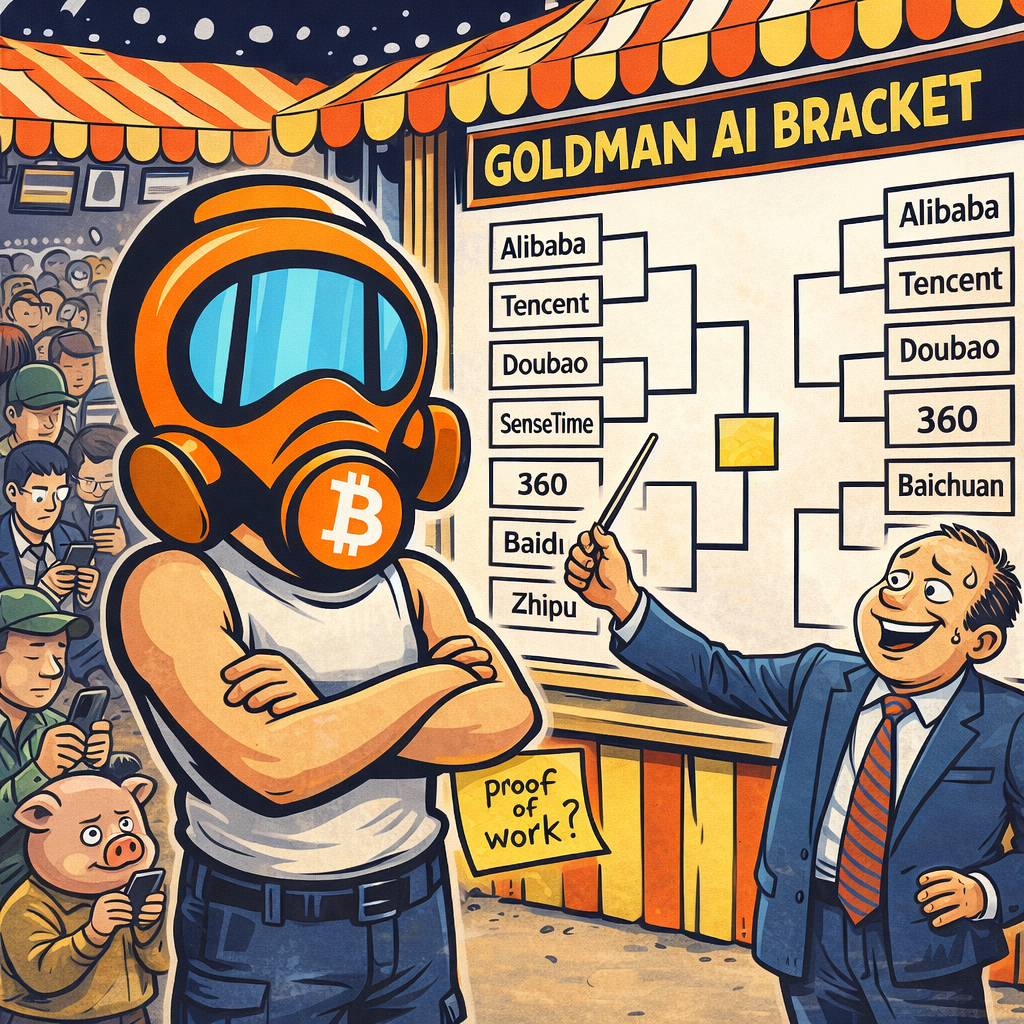
Goldman Sachs released its Chinese AI model competitive positioning framework this week, which is Wall Street speak for: we made a bracket. Somewhere in a Midtown conference room, analysts spent billable hours ranking Baidu against DeepSeek and called it research. To be fair, if you are going to place bets on which authoritarian-adjacent tech stack wins the next decade, you might as well have a seeded draw. Meanwhile, ETF Action's Mike Akins is out here waving his arms telling investors to rotate away from the Magnificent Seven and into the stuff that got left behind. The logic is sound: buy the unloved, wait six months, collect applause. The catch is that 'underperformed relative to AI stocks' in 2025 basically means 'everything that isn't Nvidia,' so the target list is quite large. Prediction markets are having a moment, and not entirely the fun kind. CNBC pinged 50 companies asking about employee trading policies on platforms like Kalshi. A handful had actual answers. The rest apparently have not thought about it yet, which tracks perfectly for compliance departments that still consider 'reply all' a threat vector. Speaking of Kalshi, traders there are pricing a 75 percent chance that gas stays above $3.50 on Election Day, with U.S.-Iran tensions doing what U.S.-Iran tensions do. Nothing sharpens a prediction market like geopolitics that rhymes with every other geopolitical moment since 2003. Higher gas prices through November: great for the vibes, terrible for the incumbent, profitable for whoever is long crude. Over in sports, the 2026 MLB Draft wrapped up Sunday with all 613 picks in the books. Six hundred and thirteen. That is not a draft, that is a census. Most of these kids will never throw a pitch in the majors, but every team gets to announce their name in a hotel ballroom and pretend they found the next Ohtani in round 14. The Open Championship is coming up at Royal Birkdale, and SportsLine's model has already simulated it 10,000 times. Ten thousand. The British Open will happen exactly once in real life, but the model has already watched it die and be reborn more times than most civilizations. Somewhere in those simulations is a version where the wind cooperates and someone actually makes a putt on 18. Fantasy baseball managers are being told to reload for the stretch run, with the All-Star break serving as the official excuse to panic-add waiver wire arms. This is the part of the season where the gap between the person who checks their lineup daily and the person who set it in March and forgot becomes truly brutal. The second half is not a comeback story for most of us. It is a eulogy in real time.
Highlights
- Goldman Sachs built a Chinese AI model leaderboard and called it a framework, which is either visionary or a very expensive bracket depending on your fee structure.
- Prediction markets are now officially important enough to need compliance policies, and most companies are finding out about this from a CNBC reporter, not their legal team.
- 613 MLB draft picks across 20 rounds and the All-Star break landing in the same week means the baseball industrial complex is running at full capacity while the rest of us are just trying to survive July.
Original source links
- CNBC: Goldman Sachs picks its favorite Chinese AI models
- CNBC: These underperforming trades could yield big returns over next six months
- CNBC: Prediction markets spark insider trading concerns. Here's how Goldman and other companies are responding
- CBS Sports: 2026 Open Championship odds, picks, date: Surprising predictions from golf model that's nailed 17 majors
- CBS Sports: 2026 MLB Draft tracker, results: Full list of 613 draft picks, analysis of every team's first-round selection
- CBS Sports: Week 17 Fantasy Baseball Waiver Wire: Looking ahead at the second halfd